


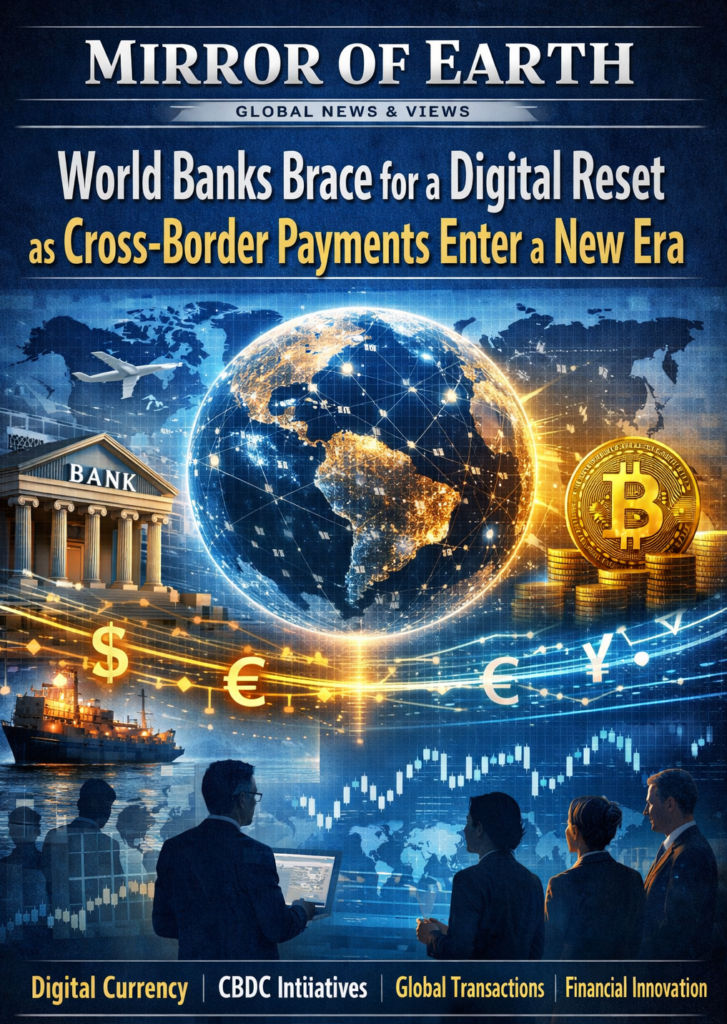
As global economies adapt to rapid technological change, central banks and financial regulators around the world are preparing for what experts describe as a historic transformation in cross-border payments. From Asia to Europe and North America, governments are accelerating discussions around digital settlement systems, aiming to reduce costs, improve transparency, and strengthen financial sovereignty.
In recent years, international trade and remittances have exposed the limitations of traditional banking rails. Cross-border transactions can still take days to settle and often involve high intermediary fees. To address this, several countries are piloting real-time payment networks and exploring central bank digital currency (CBDC) interoperability, signaling a shift away from decades-old infrastructure.
Economists note that emerging markets stand to gain significantly. Faster and cheaper international transfers could boost small exporters, migrant workers, and digital entrepreneurs who rely on global platforms. At the same time, advanced economies are focused on ensuring compliance, cybersecurity, and monetary stability as digital systems scale across borders.
However, challenges remain. Global coordination is complex, and differences in regulation, data protection, and monetary policy create friction. Analysts warn that without shared standards, the digital payment revolution could fragment into regional systems rather than a unified global network.
Despite these concerns, momentum is growing. International forums and financial institutions are calling for cooperation, emphasizing that modernizing cross-border payments is no longer optional but essential for global economic resilience. As nations navigate this transition, the coming years may redefine how money moves around the world, reshaping international finance for generations.