


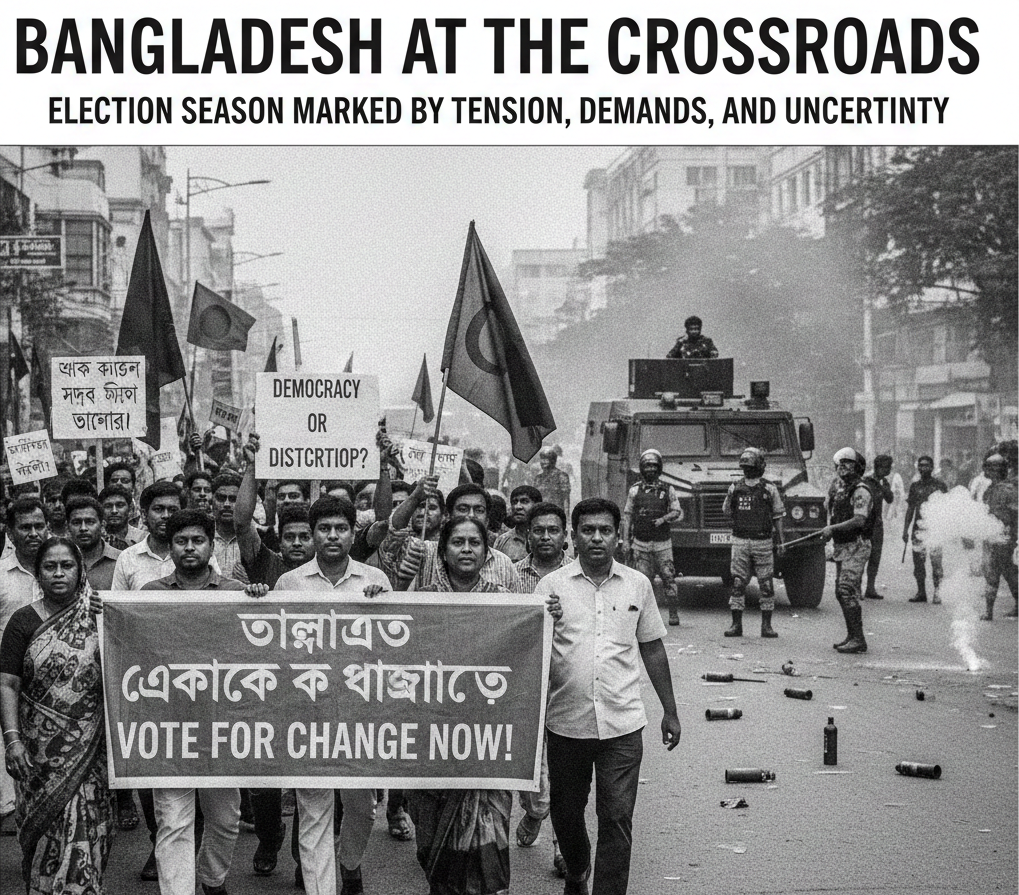
Dhaka, Bangladesh — As Bangladesh moves deeper into a crucial election period, the country’s political landscape is experiencing heightened tension, intense negotiations, and widespread public debate. The upcoming national election is widely seen as one of the most consequential in recent history, with its outcome expected to shape governance, democratic norms, and political stability for years to come.
Political Divide Deepens
The ruling authorities and opposition parties remain sharply divided over the conditions under which the election should be held. Opposition groups continue to question the neutrality of the election process, demanding structural reforms and stronger guarantees to ensure a free, fair, and inclusive vote. They argue that public trust in electoral institutions must be restored before polling begins.
On the other hand, the Election Commission has reiterated its commitment to conducting the election in accordance with the constitution, stating that preparations are underway and that necessary administrative and security measures are being strengthened nationwide.
Campaigns Gain Momentum
Despite the uncertainty, political campaigning has intensified across the country. Major parties are organizing rallies, public meetings, and door-to-door campaigns, focusing on key issues such as rising living costs, employment, governance, corruption, and law and order. First-time voters, a significant demographic group, are drawing particular attention from candidates eager to mobilize fresh support.
Smaller and newly formed political parties have also become more visible, attempting to position themselves as alternatives to traditional power blocs. Analysts suggest this could lead to a more competitive race in certain constituencies, although the overall balance of power remains difficult to predict.
Security and Public Safety Concerns
Security remains a central concern as election-related protests, clashes, and sporadic incidents have been reported in different parts of the country. Law enforcement agencies have increased patrols and announced stricter measures to prevent violence and maintain public order during the campaign period.
Civil society organizations and rights groups have urged all political actors to exercise restraint, warning that continued unrest could discourage voter participation and undermine confidence in the democratic process.
International Attention and Diplomacy
Bangladesh’s election has drawn close attention from the international community. Foreign governments and diplomatic missions have emphasized the importance of inclusive participation, political dialogue, and respect for democratic principles. Meetings between foreign envoys and political leaders have underscored global interest in a stable and credible electoral outcome.
Observers note that Bangladesh’s role in regional stability and its economic progress have made the election a matter of international concern as well as domestic importance.
Public Expectations and the Road Ahead
Among ordinary citizens, expectations are mixed with anxiety. While many express a strong desire to cast their votes and see peaceful change through democratic means, others remain skeptical due to past experiences. Voter turnout and public confidence are likely to depend heavily on how political disputes are resolved in the coming weeks.
As the election approaches, Bangladesh stands at a critical crossroads. Whether the nation can navigate this period peacefully and transparently will not only determine the composition of the next government but also test the resilience of its democratic institutions.